

Product family
DJA MOND Bushings and Sliding Systems
Precision and reliability for every application
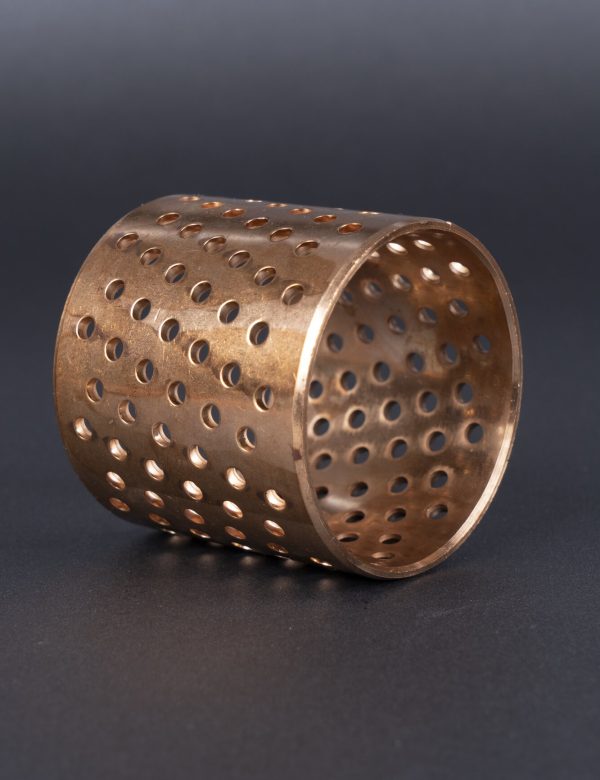
DJA MOND is the JFK Group brand dedicated to precision sliding bushings. The complete range of sliding bearings including dry self-lubricating solutions, bronze and iron sintered bushings, and technopolymer and fibre-based solutions - is carefully selected to provide verified quality, and backed by consistent availability and technical support at every stage of the project.
Guida tecnica
Sliding Bushings: Function and Selection Criteria
Sliding bushings, also known as plain bearings or sleeve bearings, are interface elements designed to support rotating or oscillating shafts and pins, reducing friction and wear between mating surfaces. Selecting the right type depends on the applied load, operating speed, environmental conditions and maintenance requirements. JFK Group supplies the complete DJA MOND bushing range, with every product carefully selected, quality-checked and backed by technical support. When standard solutions do not meet specific requirements, we design customized solutions according to customer drawings.

SELECTION GUIDE
Things to consider before making a choice
The key parameters for correctly sizing a sliding bushing – also known as a plain bearing or sleeve bearing – for your application.
The correct bushing selection depends on a combination of mutually interacting factors. The primary parameter is always the specific load P — the operating load divided by the projected bearing area of the bushing, expressed in N/mm². Another key parameter is the PV factor, defined as the product of specific load and sliding speed, which determines the component’s expected service life.
Besides P and PV, several other parameters influence bushing performance and service life: the roughness and material of the mating surface, operating temperature, environmental conditions (contamination, humidity and chemical agents), and the type of motion (continuous, oscillating or intermittent). Intermittent operation is particularly beneficial, as it allows better heat dissipation and lowers the average operating temperature.
Technical guide
Frequently asked questions
01
What is a sliding bushing and when is it preferred over a rolling bearing?
A sliding bushing is an interface component designed to support rotating or oscillating shafts and pins while reducing friction and wear between mating surfaces. It is preferred over rolling bearings in applications with limited radial space, high loads and low speeds, contaminated environments with dirt or humidity, or where a maintenance-free solution is required. Sliding bushings offer better resistance to shock loads and vibrations while providing a more compact and cost-effective solution.
Suitable product families
02
What is DJA MOND and how is it connected to JFK Group?
DJA MOND is the JFK Group brand dedicated to bushings: a range carefully selected, quality-checked and technically supported by JFK Group to ensure verified quality and continuous availability. Each product is chosen according to specific technical requirements and thoroughly verified before entering the catalogue.
03
How many product families does the DJA MOND range include, and how are they differentiated?
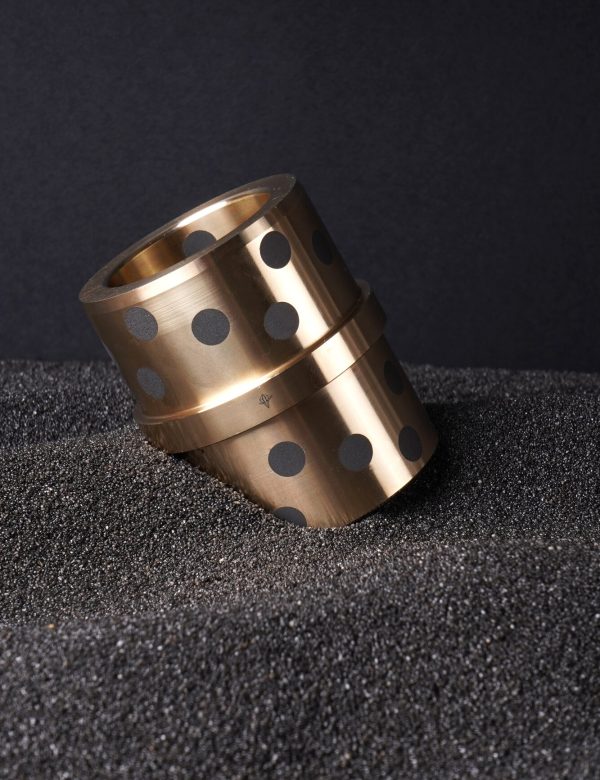
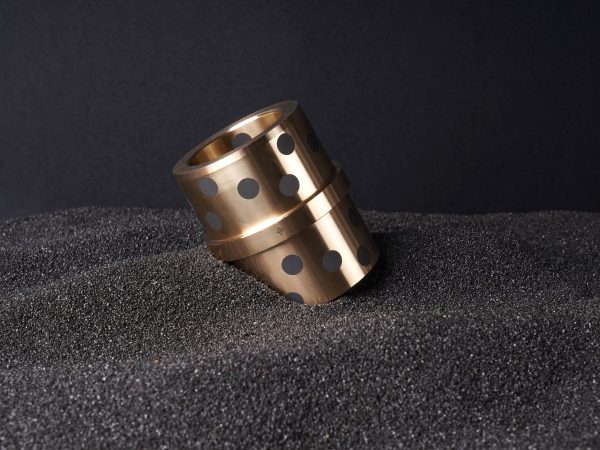
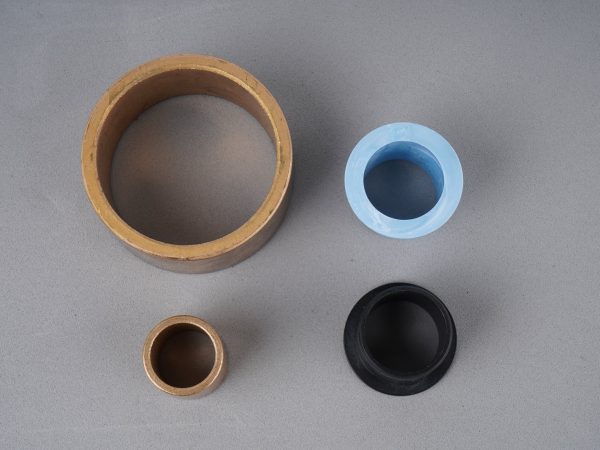
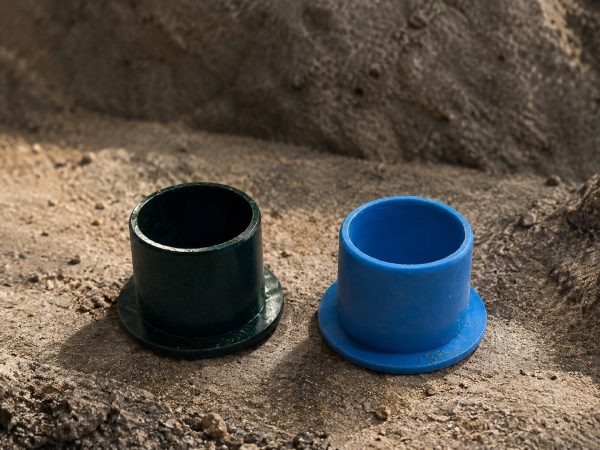
The range is structured into five main product families: dry self-lubricating bushings (BG../AG../CG.. and PT..SL series), case-hardened bushings (BAC.. series), bronze and bimetal bushings (PB..AR/FP and BJ.. series), bronze and iron sintered bushings (BZ.. and FE.. series), and special technopolymer and fibre-reinforced bushings (EPB and FWB series). Each family is differentiated by material, construction technology, load capacity, operating temperature range and lubrication requirements.
Suitable product families
04
What is the difference between self-lubricating bushings and relubricable bushings?
Self-lubricating bushings incorporate the lubricant directly into their material structure (PTFE and graphite inserts in BG../AG../CG.. series, PTFE composite layers in PT..SL series, and oil-impregnated structures in sintered bushings), eliminating the need for external lubrication throughout the entire service life. Relubricable bushings, such as bronze rolled bushings PB..AR/FP and bimetal bushings BJ.., require periodic lubrication but deliver higher load capacity and longer service life in demanding applications.
Suitable product families
05
What is “dry running” and under which conditions can it be achieved?
Dry running refers to operation without external lubrication between the bushing and the shaft. It is enabled by self-lubricating bushings, where PTFE or graphite-based materials generate a self-lubricating film during sliding contact. Dry running is most suitable under moderate loads, limited sliding speeds and controlled operating temperatures. Under high loads or high-speed conditions, prolonged dry running may negatively affect service life; in such applications, oil-impregnated sintered bushings or relubricable solutions are recommended.
Suitable product families
06
What are the key technical parameters for choosing the right bushing?
The two key parameters are the specific load P (the operating load divided by the projected bearing area of the bushing, expressed in N/mm²) and the PV factor, calculated as the product of specific load and sliding speed, which defines the expected service life of the component. Other important factors are operating temperature, the roughness and material of the mating surface, environmental conditions (contamination, humidity and chemical agents), and the type of motion: continuous, oscillating or intermittent.
07
Can DJA MOND bushings operate under extreme temperature conditions?
Performance depends on the product family. Dry self-lubricating BG../AG../CG.. series bushings cover one of the widest available operating temperature ranges, from –40°C to +300°C. EPB technopolymer bushings operate between –40°C and +80°C, while sintered and bimetal bushings cover intermediate temperature ranges. In high-temperature applications, lubricant compatibility must also be verified whenever lubrication is required.
Suitable product families
08
Can DJA MOND bushings be used in environments exposed to chemicals or moisture?
Yes, but material selection is a key factor. Stainless steel self-lubricating bushings (PT..SL inox series) and EPB technopolymer bushings provide excellent resistance to corrosion and chemical exposure. FWB fibre-reinforced bushings, thanks to their epoxy resin structure and PTFE layer, are suitable even in humid environments and applications involving contact with liquids. Standard bronze and iron versions are less recommended for highly corrosive conditions.
Suitable product families
09
What are sintered bushings and how does their self-lubricating mechanism work?
Sintered bushings, also known as sintered bronze bearings, are manufactured through powder metallurgy. Their porous structure (with 25–30% porosity in the bronze BZ.. series) is impregnated with a selected lubricant oil. During operation, friction-generated heat causes the material to expand, forcing the oil to migrate to the sliding surface; when the machine stops and cools down, the oil is drawn back into the porous structure. This creates a closed self-lubricating system with no need for maintenance, particularly suitable for high rotational speeds and low loads.
Suitable product families
10
What is the difference between BZ.. bronze sintered bushings and FE.. iron sintered bushings?
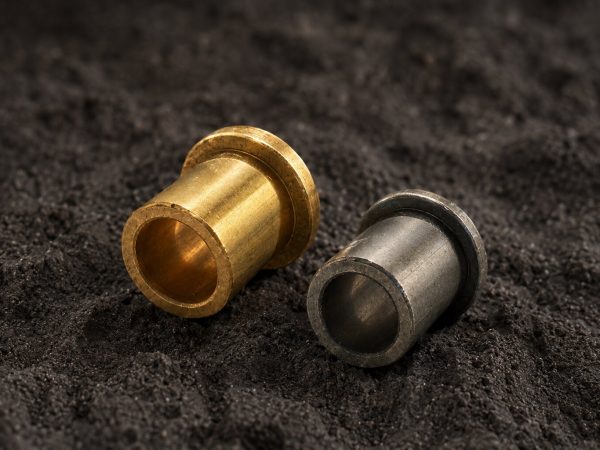
Both types use the same oil-impregnated self-lubrication principle, but they are designed for different operating conditions. BZ.. sintered bronze bushings are optimized for high rotational speeds and low loads, making them suitable for applications such as small electric motors, automation equipment, and food and pharmaceutical machinery. FE.. sintered iron bushings offer higher load capacity and are typically used in industrial machinery, power tools and agricultural applications.
Suitable product families
11
Do BJ.. bimetal bushings comply with international standards?
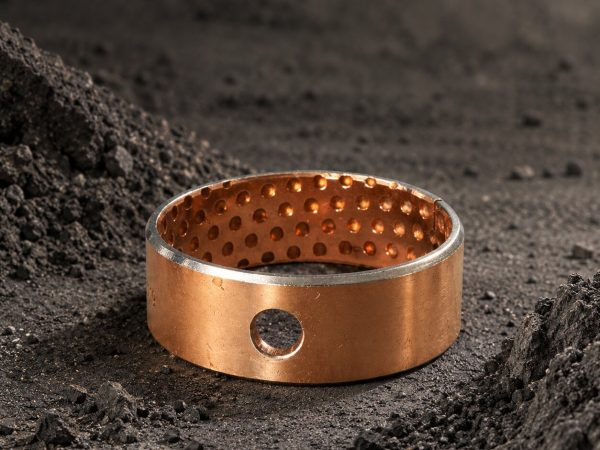
Yes. BJ.. bimetal bushings comply with ISO 3547, the international standard defining the dimensions, tolerances and characteristics of thin-walled plain bearings. Their three-layer structure (steel backing, sintered bronze layer and optional copper plating) ensures high load capacity, excellent heat dissipation and interchangeability with products from other manufacturers complying with the same standard. They are mainly used in automotive and engine applications.
Suitable product families
12
When should FWB fibre bushings be chosen over other product families?
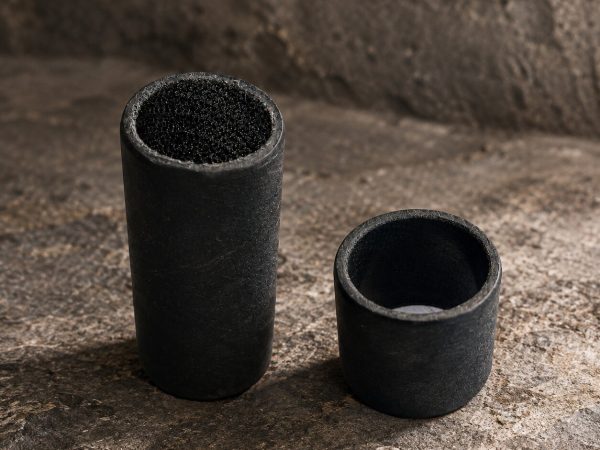
FWB fibre-reinforced bushings are the preferred solution for very high loads (up to 140 MPa) and low sliding speeds, where extended dry-running operation without oil is required. Their glass fibre-reinforced epoxy structure with a PTFE sliding layer ensures a coefficient of friction below 0.12 and excellent resistance to chemical agents. They provide an innovative solution for heavy-duty applications in construction equipment, agricultural machinery and lifting systems.
Suitable product families
13
Does JFK Group manufacture bushings according to customer drawings?
Yes. When standard catalogue solutions are not sufficient, JFK Group develops customized components starting from technical drawings, physical samples or customer functional requirements. The technical team supports the entire process, from feasibility analysis and supplier selection to prototyping, validation and series production control.
Solutions
Find the right solution for your application
01
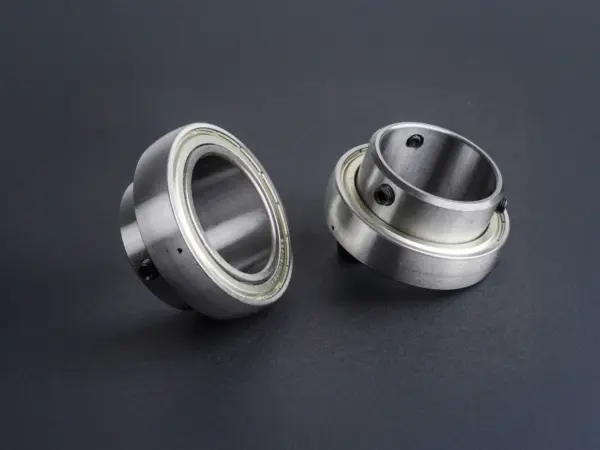
Does your application require lubrication-free operation?
In these applications, the ideal solution is a component designed for dry operation, without the need for external lubrication. Special materials, geometries and surface treatments make this possible by reducing friction and wear. Recommended product families: self-lubricating bushings, bronze bushings and sintered bushings.
02
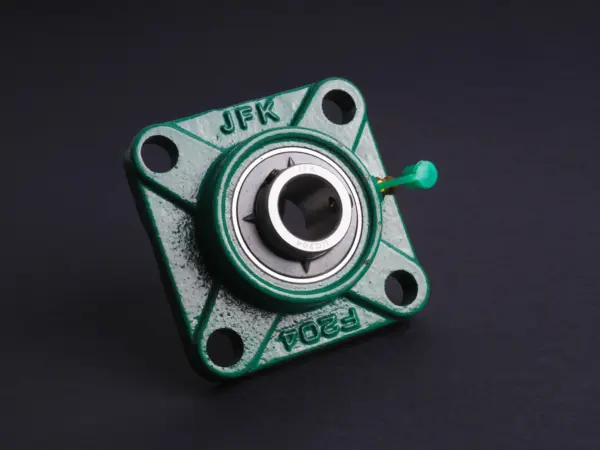
Do you have a rotating component that needs support?
In these applications, the optimal solution depends on the type of load (radial, axial or combined) and operating speed. The correct bearing selection reduces friction and ensures accuracy and long service life. Recommended product families: radial bearings, thrust bearings and self-aligning bearings.
03
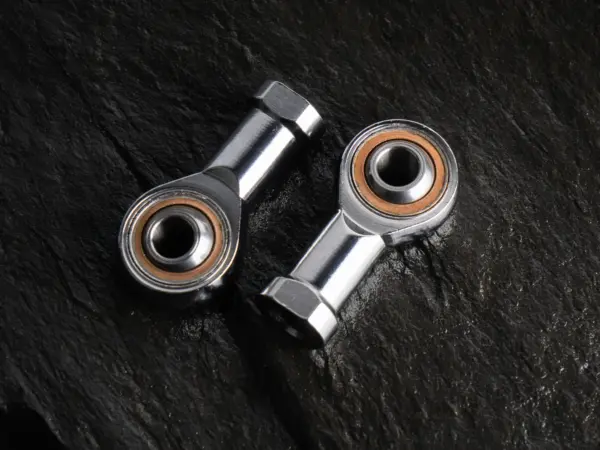
Do you need accurate linear movement?
For applications requiring this type of performance, linear guides and ball screws are the most widely used solutions to ensure positioning accuracy and long-term repeatability. Recommended product families: ball linear guides, roller linear guides and ball screws.
04
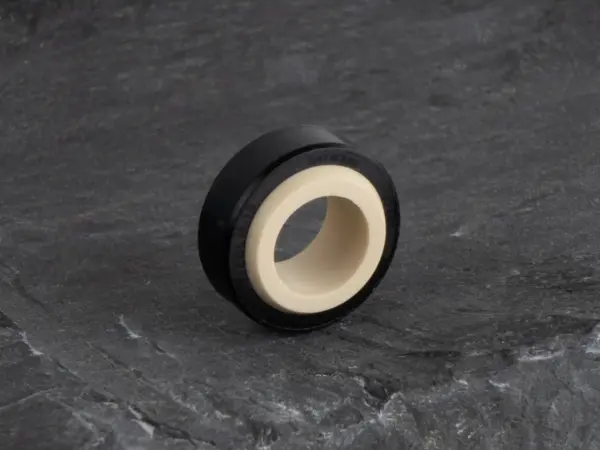
How do you lock the component onto the shaft?
Locknuts and retaining rings provide precise and reliable axial locking of the component on the shaft or inside the housing bore. Recommended product families: KM / KMT locknuts, retaining rings and precision shims.

Have a specific requirement?
Let’s discuss your project
JFK’s technical team analyses loads, speeds and operating conditions to identify the right solution.