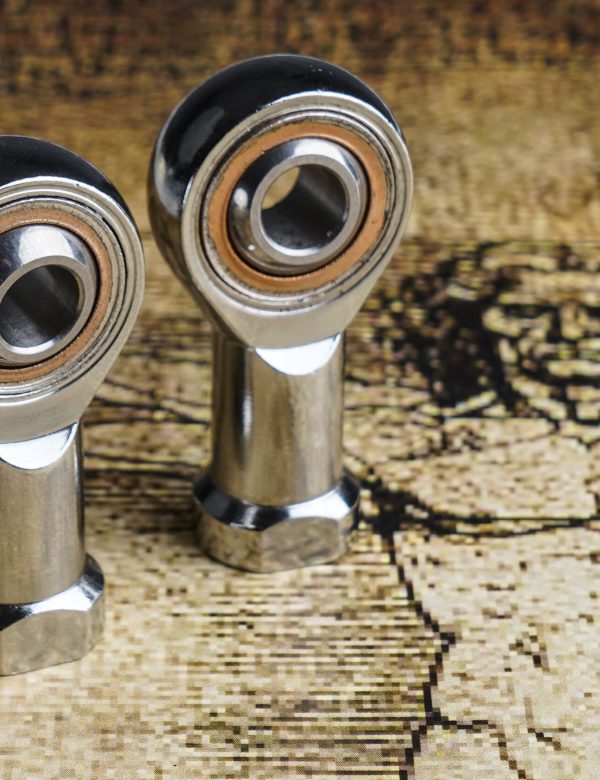
JFK straight ball joints
JFK spherical plain bearings and rod ends
- Misalignment compensation
- Articulated linear motion
- Male or female threaded shanks
JFK straight ball joints are connection components designed to transmit predominantly linear tensile or compressive loads along rods and tie rods, while the integrated spherical head compensates for the small angular misalignments that naturally occur between connected components during operation. Unlike angular spherical joints, the spherical head here serves to correct alignment rather than define a fixed working angle.
This configuration makes them particularly suitable for connecting actuators, cylinders, and control rods where the main movement is linear, but small alignment errors between the connected components need to be absorbed without introducing parasitic loads into the system. In particular, they compensate for the lack of parallelism and concentricity typically found at the ends of hydraulic and pneumatic cylinders. The pairing consists of a zinc-alloy housing with a PTFE-bronze composite liner, a die-cast body, and a steel ball stud welded to the pin; a rubber seal maintains the seal and protects the lubricating grease (RBI..RS series). They are available with either male or female threaded shanks to suit different mounting configurations.
Versions
How to choose the right ball joint
The choice depends on the connection configuration: a male threaded shank for direct assembly into a threaded hole, or a female threaded shank for assembly onto a pin or through-bolt.
Straight ball joints with male threaded shank
The shank ends with an external thread for direct assembly into a threaded hole in the component to be connected. Available with right- or left-hand threads for use in adjustable tie rods with dual connections. External threaded shank · Right- or left-hand thread · Direct assembly
Straight ball joints with female threaded shank
The shank features an internal threaded hole for assembly onto a threaded pin or through-bolt of the component to be connected. This solution is suitable when the connecting component is already equipped with an external thread. Internal threaded hole · Assembly onto a pin or bolt · Flexible mounting
Performances
Design and performance features
Threaded shank and integrated spherical head for transmitting linear motion while compensating for small angular misalignments between connected components.
Movement
Predominantly linear movement with angular misalignment compensation They transmit predominantly linear tensile or compressive motion, while the spherical head compensates for the small angular misalignments that occur during operation.
Typical application
Connection of actuators, cylinders, and control rods Suitable for connecting linear actuators, hydraulic or pneumatic cylinders, and control rods where small alignment errors need to be absorbed without introducing parasitic loads.
Material
Steel pin and ball stud; zinc-alloy/PTFE-bronze housing Steel pin and ball stud joined by electric welding; zinc-alloy housing with a die-cast PTFE-bronze composite liner, with a rubber seal protecting the lubricating grease.
Load
Optimized for axial loads The stem-and-spherical-head configuration is optimized for transmitting axial tensile and compressive loads along the axis of the rod or tie rod.
Thread
Male or female shank, right or left Available with male or female threaded shanks, and with right-hand or left-hand threads for use in adjustable tie-rods with opposing fittings.
Mounting
Installation of straight ball joints
Installation is carried out by screwing the rod into the connecting element, aligning the main working axis and applying the specified tightening torque for the thread.
Installation Mounting
- Screwing and alignment of the working axisScrew the rod into the connecting element, ensuring that the main working axis is properly aligned to limit spherical head oscillation to residual misalignment only.
- Installation methodsSecure the thread with a locknut or equivalent locking system to prevent loosening under vibration during cyclic operation.
Technical data
- Movement
- Predominantly linear movement with angular misalignment compensation
- Typical application
- Connection of actuators, cylinders, and control rods
- Material
- Steel pin and ball stud; zinc-alloy/PTFE-bronze housing
- Load
- Optimized for axial loads
- Thread
- Male or female shank, right or left
Applications
Applications
Components and application support for every industrial environment.

Industrial automation
Connection of linear actuators and cylinders in motion systems, where minor misalignments must be accommodated without generating unwanted stresses.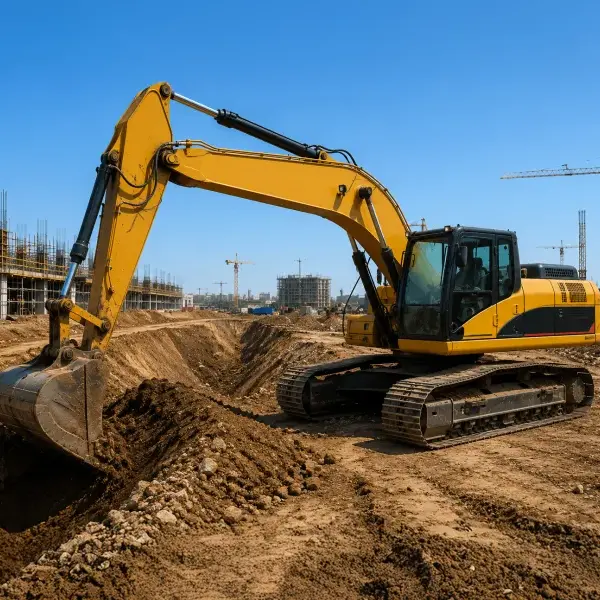
Construction Equipment
Control rods of hydraulic and pneumatic cylinders subject to dynamic misalignment during the operating cycle.
Metal Fabrication / Machining Industry
Linear adjustment systems where compensation for minor alignment errors between connected components is required.
Agriculture
Control rods and tie rods on agricultural machinery, where vibrations and dynamic loads generate misalignments that need to be accommodated.
Contacts
Request information about this product
Complete the form for technical information, quotations or trial samples.
Related products
Please also consider these alternatives: Linear adjustment systems requiring compensation for minor alignment errors between connected components. For axial applications requiring a maintenance schedule with periodic relubrication. For applications where periodic maintenance is to be eliminated while maintaining the same rod-to-spherical-head configuration.
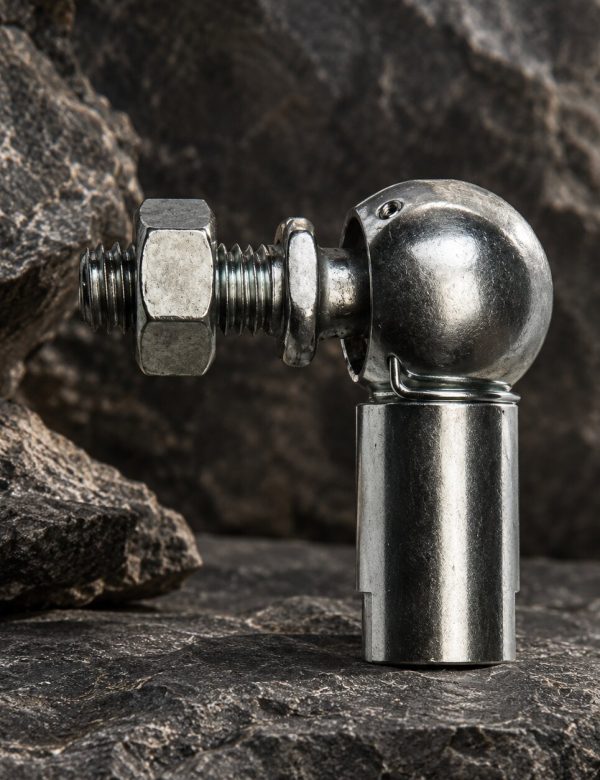
JFK angular ball joints
JFK angular ball joints, also known as angular joints or angular spherical joints, are connection components designed to join two parts at an angle…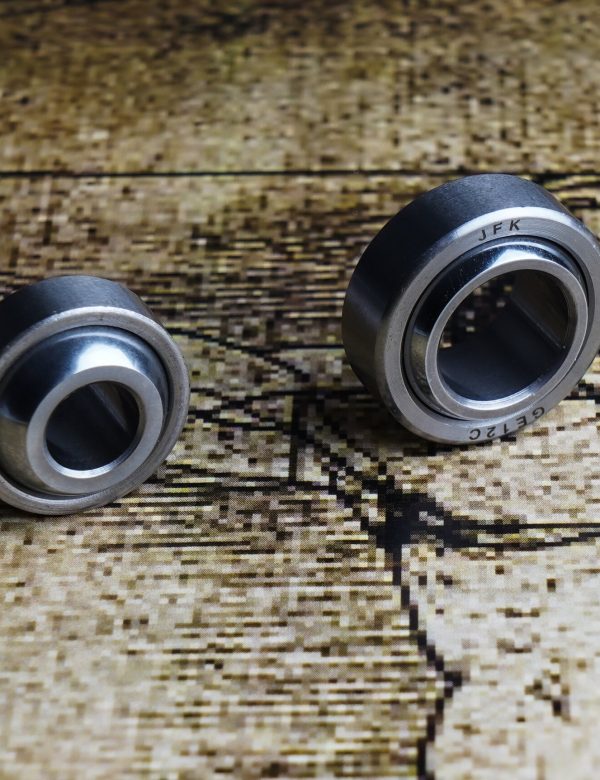
JFK radial spherical plain bearings
JFK radial spherical plain bearings are mechanical components designed to withstand high radial loads, such as those encountered in hydraulic and pneumatic cylinders. The…